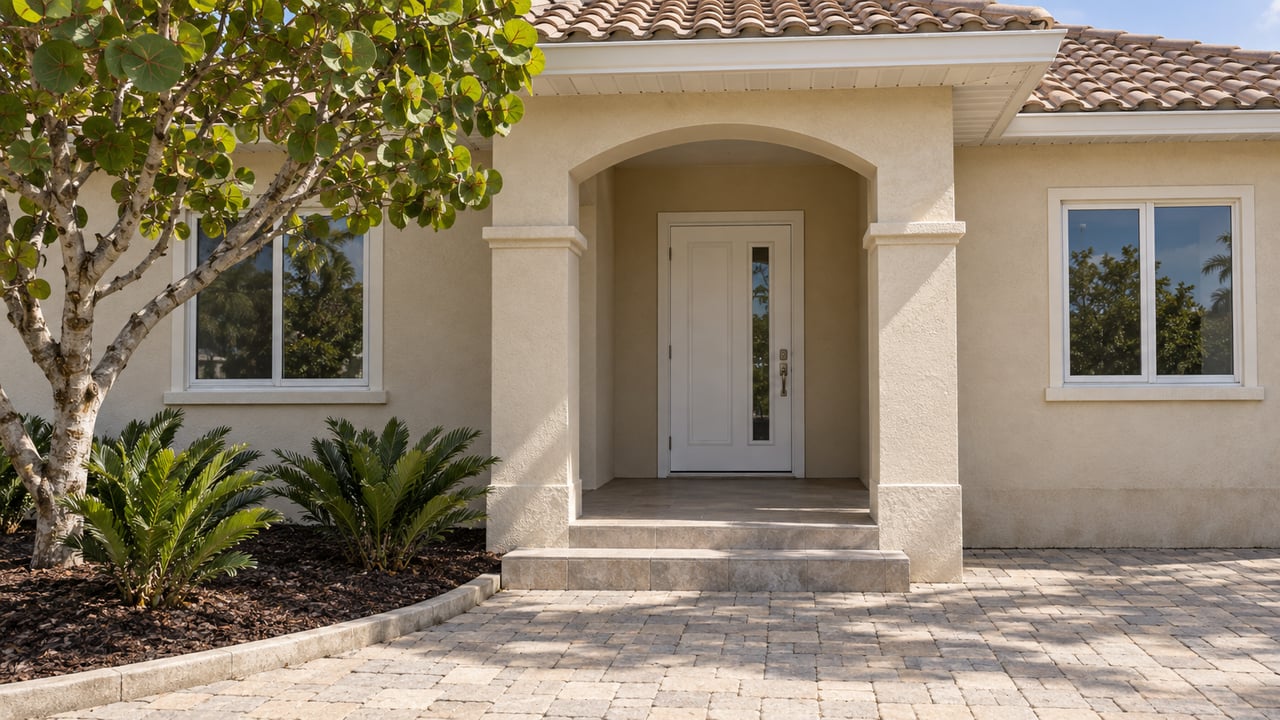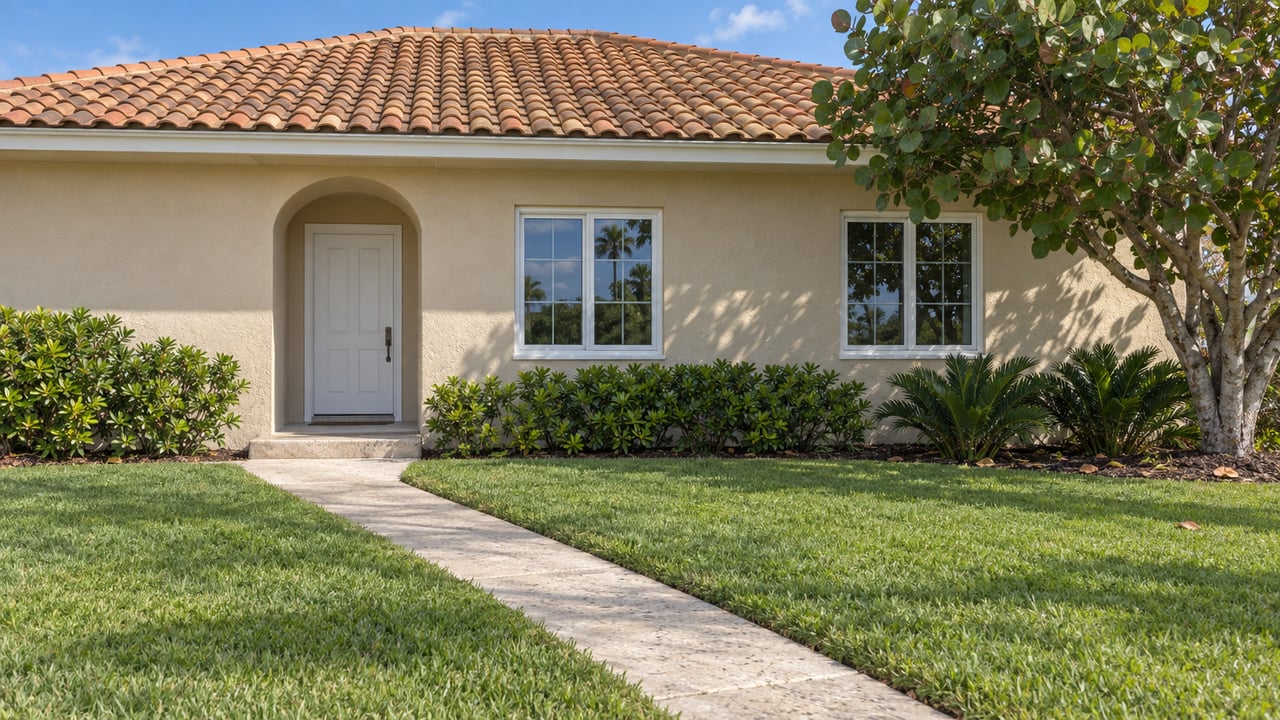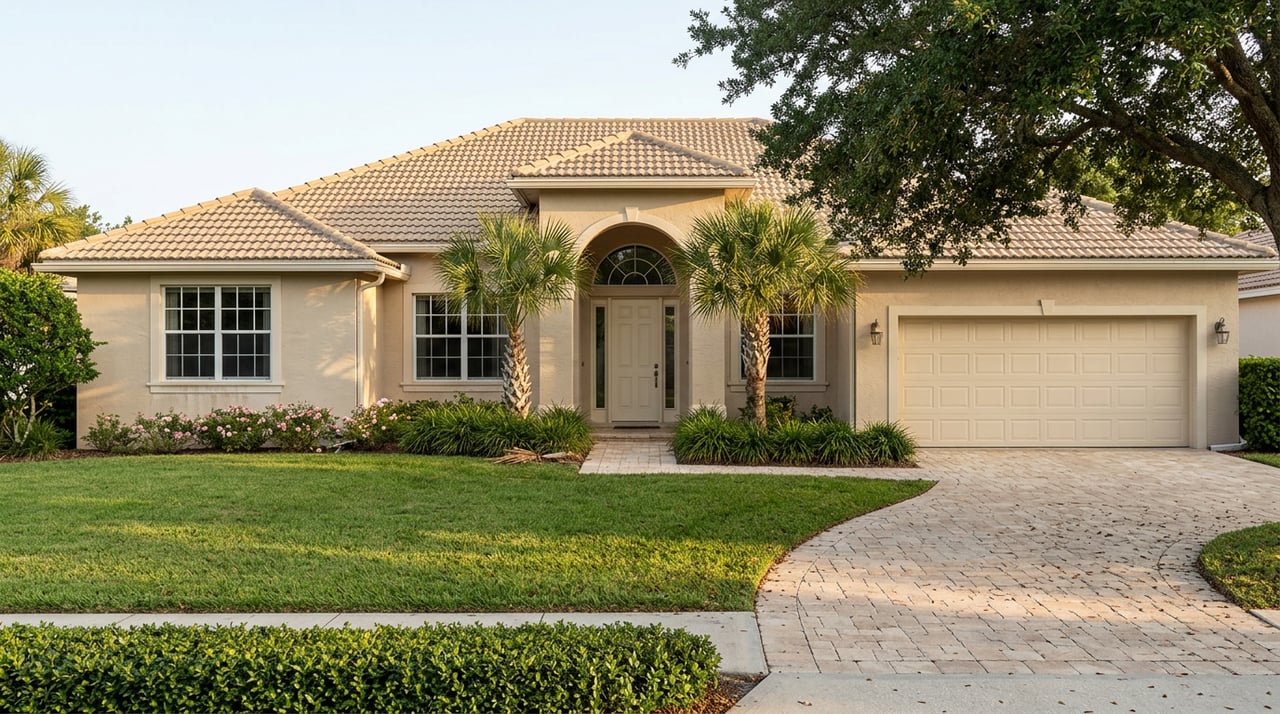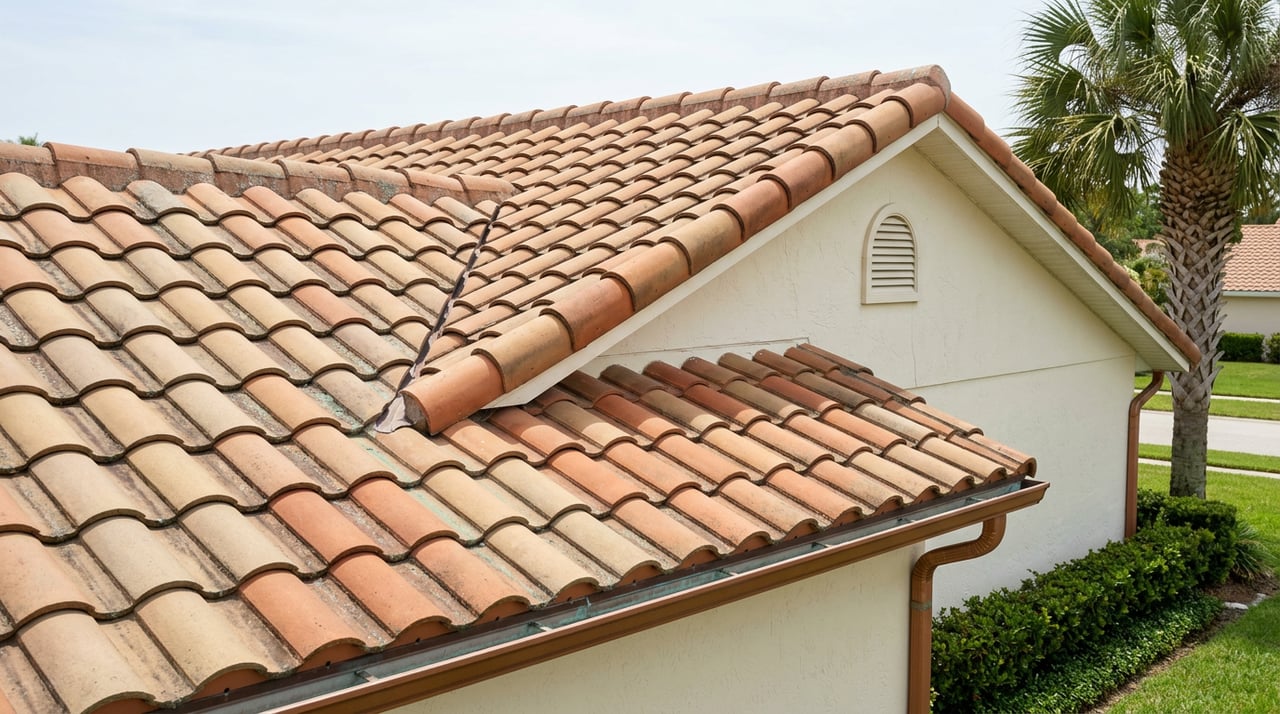
A buyer comparing a block home in Eau Gallie to new construction near Viera this year is looking at two different decades, not just two different price tags. Eau Gallie's older housing stock has been trading in the high $200,000s while newer-code construction closer to Viera routinely clears $500,000. That gap reads like the trade every value-conscious buyer already understands: spend less, get an older roof and a shorter commute to the Indian River Lagoon instead of a master-planned amenity fee.
The trade is real. It just doesn't show up during the home inspection. It shows up two or three weeks later, when the insurance quote comes back higher than the mortgage payment, or doesn't come back at all. In Melbourne's older pockets, especially the streets off Wickham Road and Lake Washington Road, the underwriter reads the house differently than the buyer does.
Older Homes, Different Insurance Questions
Florida's statewide building code tightened meaningfully in the years after Hurricane Andrew, but Clovered identifies 2001 as the local marker that matters for Melbourne's older neighborhoods. A large share of the housing off Wickham and Lake Washington predates that line, which means the wind mitigation features that lower a premium have to be added after the fact, if they exist at all.
This is the part a listing photo can't show. A 1970s block home with a fresh coat of paint and updated kitchen can look move-in ready while still carrying single-nail roof attachment and no storm shutters. The house passes a visual walkthrough. The insurance underwriter is asking a different question entirely.
What the Underwriter Actually Checks
Florida law gives homeowners a specific protection once a roof crosses 15 years old: the insurer can't force a full replacement if a licensed inspector certifies at least five more years of useful life. That protection is real, but it only kicks in after the inspection happens, and the inspection is where older Melbourne homes tend to hit friction.
Most Florida carriers require a four-point inspection on homes over 20 years old, and some ask for one starting at 15. That inspection looks at exactly four systems, and each one has a specific failure pattern in homes from the Eau Gallie era:
| System | What insurers flag | Why it shows up in older Melbourne homes |
|---|---|---|
| Roof | Age past 15 years, missing permit history | Pre-2001 stock rarely has hurricane-strap documentation |
| Electrical | Aluminum wiring, Federal Pacific or Zinsco panels | Common cost-saving choices in 1960s-70s construction |
| Plumbing | Cast iron drain lines | Standard material before PVC became typical |
| HVAC | Age and condition | Ties into overall underwriting risk score |
The electrical piece catches the most buyers off guard. Federal Pacific and Zinsco panels have a documented history of failing to trip during a power surge, and many carriers will not write a policy on a home that still has one installed. A buyer can love everything about a house and still watch the deal stall because the panel in the garage is the wrong brand.
The plumbing piece is the quiet one. Cast iron drain lines installed in the 1960s can deteriorate from the inside, and the only way to know their real condition is a camera inspection, which is not part of a standard four-point report and has to be requested separately.
The Timeline Problem Nobody Puts on the Contract
Here is the actual friction point for a Melbourne buyer working through due diligence on one of these homes. A standard home inspection happens fast, usually within the first week of a contract, and it tells you what's wrong with the house. It does not tell you whether an insurance carrier will write a policy on it, or at what price.
Getting that answer requires its own sequence: a wind mitigation inspection to document any storm-resistant features already in place, a four-point inspection if the home is old enough to trigger one, and then an actual quote from a carrier willing to write the risk. Each of those steps takes time to schedule, and none of them is guaranteed to happen inside a typical inspection period if the buyer only starts the process after the home inspection comes back clean.
The result is a buyer who clears the inspection contingency, feels confident, and then discovers during mortgage underwriting that the insurance quote is $400 a month higher than budgeted, or that no standard carrier will write the policy at all and the only option left is Florida's insurer of last resort. By that point the leverage to renegotiate or walk away has mostly evaporated.
What Changed, and What Didn't, in 2026
Two bills this year, House Bill 815 and its Senate companion Senate Bill 808, would have expanded the existing roof-age protections to cover condo association policies and landlord policies, and would have created a separate standard for flat or low-slope roofs that could be restored with a coating system instead of a full tear-off. Both bills died in the Insurance and Banking Subcommittee in March 2026. For a single-family buyer in Eau Gallie or off Lake Washington Road, that means the rules in effect right now are the same ones that have applied for the past several years: the 15-year threshold, the five-year useful life certification, and no expanded coating-system option for a low-slope roof.
That stability cuts both ways. It means the process is at least predictable. It also means the friction described above isn't a temporary quirk waiting on a legislative fix. It's the standing condition of buying an older home in this part of Melbourne, and it will still be the condition next year unless the legislature revisits it.
What This Actually Means for the Price Gap
None of this makes an Eau Gallie home a bad purchase. Many of these homes are concrete block, which rates well structurally even with an older roof, and a wind mitigation inspection often finds more storm-resistant construction than a buyer expects, especially if a previous owner already added hurricane straps or impact windows. But the price gap between an older Melbourne home and new construction near Viera isn't free money sitting on the table. Part of it is compensation for a system that may need documentation, repair, or replacement before a carrier will insure it on standard terms.
The buyers who come out ahead are the ones who treat the insurance question as part of the offer strategy, not an afterthought after the inspection. That means ordering the wind mitigation inspection early, asking the seller whether one already exists, and getting an actual carrier quote before the inspection contingency deadline rather than after it.
A Few Questions Worth Asking Before You Write the Offer
Does the seller already have a wind mitigation inspection on file? The form, OIR-B1-1802, stays valid for five years, and if the current owner has one, it saves both time and the $75 to $150 inspection cost.
Is the electrical panel a brand a carrier will insure? This is a five-minute question to ask the listing agent before scheduling anything, and it can save a buyer from falling in love with a house that has a hard stop built into the garage.
Can the four-point inspection happen inside the standard inspection period? If the answer is no, ask for a short extension in the contract rather than letting the insurance question run past the deadline unresolved.
Buying in Melbourne's older neighborhoods still makes sense for a lot of households, especially anyone weighing proximity to the Indian River Lagoon and the Eau Gallie corridor against a longer drive from newer construction farther out. The point isn't to avoid these homes. It's to run the insurance sequence on the same clock as the inspection, not after it.
If you're weighing a purchase in Eau Gallie, off Wickham Road, or anywhere else in Melbourne's older housing stock, Angélica Garcia Realtor can walk through the sequencing with you before you write the offer. Drop us a line, let's talk about your next move.
FAQ
Is the insurance question something my home inspector will catch? No. A standard home inspection and a four-point insurance inspection look at different things. The home inspector tells you the general condition of the house. The four-point inspection is specifically what your insurance carrier uses to decide whether to write a policy and at what price.
Can a 1960s or 1970s home in Melbourne still get standard insurance? Often, yes, especially if it's concrete block and has had panel or plumbing updates. The roof age and system age drive the decision more than the decade the house was built.
What's the one thing to do before making an offer on an older Melbourne home? Ask the listing agent whether a wind mitigation inspection already exists and what brand of electrical panel is installed. Both answers take minutes to get and can shape whether the house is worth pursuing at the listed price.
This article is general information, not legal, tax or financial advice. Consult a qualified professional about your situation.